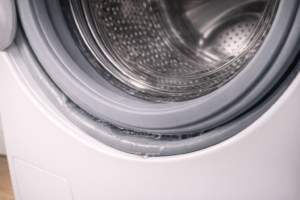
If your washing machine is leaking from the front door area, the issue is usually related to the rubber door seal rather than internal plumbing components. On front-loading machines, the door gasket is responsible for containing water during the wash and spin cycles. When it does not seal correctly, water can escape from the front of the machine.
Understanding exactly where the water is appearing can help narrow down the cause.
Where the Water Is Collecting
Leaks from the front door area often show up in one of these ways:
-
A small puddle forming directly below the door
-
Water dripping from the bottom edge of the door frame
-
Moisture visible around the outer rim of the gasket
-
Water appearing only during certain cycles
If water is clearly coming from the front rather than underneath or from the back of the washer, the seal is one of the first areas to inspect.
Common Reasons for Front Door Leaks
Debris Trapped in the Seal
The door gasket has deep folds designed to flex during washing. Small objects like lint, threads, coins, or hair can become trapped in these folds. When the door closes, trapped debris can prevent the rubber from forming a tight seal against the glass.
Checking the lower section of the gasket is especially important, as debris often settles there.
Buildup Affecting the Seal Surface
Detergent residue, fabric softener, and moisture can accumulate over time. This buildup can interfere with how evenly the gasket presses against the door. In some cases, mould growth can also affect the seal’s flexibility.
Cleaning the gasket thoroughly may resolve minor front-door leaks.
Worn or Cracked Rubber
As washing machines age, the rubber seal may begin to show signs of wear. Look for:
-
Small splits near the bottom
-
Cracks along the inner lip
-
Sections pulling away from the frame
Even minor cracks can allow water to pass through when the drum is full or spinning at high speed.
Misaligned or Loose Seal
The gasket is secured by retaining bands. If it becomes slightly loose or misaligned, the seal may not sit evenly around the door opening. This can cause water to leak from one specific area along the front.
Overloading the Drum
Overloading can place extra pressure on the door during the spin cycle. Heavy loads may press clothing against the glass and temporarily distort the seal, allowing water to escape from the front.
If the leak only occurs during larger loads, reducing the load size may help.
What You Can Check Safely
Before assuming the seal needs replacement, there are a few safe checks you can perform.
-
Gently pull back the rubber folds and look for trapped debris
-
Wipe the gasket clean with a soft cloth
-
Inspect for visible tears or cracks
-
Confirm the door closes evenly without resistance
Avoid using sharp objects when examining the seal.
For more detailed inspection guidance, see How to Inspect a Washing Machine Door Seal for Damage.
If cleaning may resolve the issue, How to Clean a Washing Machine Door Seal Properly outlines the process.
When Replacement May Be Necessary
If you find visible splits, cracks, or sections pulling away from the frame, cleaning alone is unlikely to stop the leak. In these cases, replacement may be required.
To understand when a seal is typically considered worn beyond recovery, read When a Washing Machine Door Seal Needs Replacement.
For a broader overview of door seal leaks and what to check first, see Washing Machine Door Seal Leaking: Causes and What to Check First.
A Practical Approach
A washing machine leaking from the front door area is often caused by buildup, minor wear, or trapped debris rather than a major internal failure. Starting with careful inspection and cleaning can help narrow down the cause.
If visible damage is present or the leak continues after cleaning, evaluating replacement options may be the next logical step. Taking a structured approach helps prevent unnecessary repairs and keeps the focus on the most likely source of the leak.