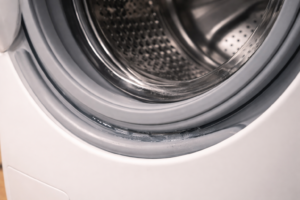
If your washing machine door seal is leaking, the issue is often more specific than it first appears. The rubber gasket around the door is designed to create a tight, flexible barrier that keeps water inside the drum during a wash cycle. When that seal stops working properly, even small changes can lead to visible leaks.
This guide explains why door seal leaks happen, what you can safely check, and when repair or replacement is usually considered.
What the Door Seal Actually Does
On a front-loading washing machine, the door seal (also called a gasket or boot seal) sits between the drum and the door glass. Its job is to create a watertight barrier during washing and spinning while absorbing movement and vibration as the drum turns.
Because it is made of flexible rubber, it is constantly exposed to water, detergent residue, fabric lint, pressure, and temperature changes. Over time, this combination can affect how well it seals.
Common Signs the Door Seal May Be the Problem
Not all leaks mean the seal has completely failed. Some of the most common signs include water dripping from the lower edge of the door, small puddles forming at the front of the machine, moisture visible along the inside lip of the rubber, visible cracks or loose sections, and persistent mould or buildup inside the gasket folds.
If water is consistently coming from the door area rather than underneath or from the back of the machine, the seal is one of the first components to check.
For a closer look at this symptom specifically, see Why Is Water Leaking From the Washing Machine Door?
Why a Washing Machine Door Seal Leaks
There are several typical causes of seal-related leaks.
Dirt or Debris Preventing a Proper Seal
Small items like lint, hair, or fabric threads can collect inside the folds of the gasket. If debris builds up along the sealing edge, the door may not close tightly enough to prevent leaks.
You can read more about this in Can a Dirty Door Seal Cause Leaks?
Mould or Detergent Buildup
Moisture left in the seal after washing can encourage mould growth. Over time, this buildup can distort the rubber or interfere with how evenly it presses against the door glass.
More detail is covered in Why Mould or Buildup Can Cause Door Seal Leaks.
Wear, Cracks, or Tears
Rubber components naturally age. Signs of damage may include small splits along the inner lip, cracks near the bottom of the seal, or sections that feel brittle instead of flexible.
If you suspect damage, How to Inspect a Washing Machine Door Seal for Damage explains what to look for safely.
The Seal Has Shifted Out of Position
The gasket is held in place by retaining bands. If it becomes loose or partially detached, water may escape even if the rubber itself is not torn.
The Seal Is Worn Beyond Recovery
If cleaning does not resolve the leak and damage is visible, replacement is often considered. You can learn more in When a Washing Machine Door Seal Needs Replacement.
What You Can Check Safely First
Before assuming the machine needs repair, there are several simple checks you can perform.
Inspect the Lower Edge
Leaks often appear at the bottom of the door. Gently pull back the rubber folds and look for debris, hair or lint buildup, and visible tears. Avoid using sharp tools during inspection.
Clean the Seal Thoroughly
Cleaning can sometimes resolve minor leaks caused by buildup. A soft cloth and mild cleaning solution are usually sufficient.
Step-by-step guidance is available in How to Clean a Washing Machine Door Seal Properly.
Run a Short Test Cycle
After cleaning and checking for visible damage, run a short cycle while monitoring the door area. If the leak continues, further action may be required.
When Cleaning Is Not Enough
If the seal shows visible splits, cracks, or sections pulling away from the frame, cleaning alone will not restore its function.
At that stage, you may need to consider whether replacement is practical, the likely cost involved, and whether a full appliance replacement makes more sense.
For decision support, see:
What If a New Seal Still Leaks?
In some cases, a newly installed seal may continue leaking due to fit or installation issues. This is covered in Why a New Door Seal May Still Leak (Installation and Fit Issues).
How to Reduce Future Seal Leaks
Preventative steps can help extend seal life. Wipe the gasket dry after use, leave the door slightly open between washes, clean buildup regularly, and avoid overloading the drum.
Long-term prevention guidance is outlined in How to Prevent Future Washing Machine Door Seal Leaks.
A Practical Approach
A leaking door seal does not automatically mean the washing machine is beyond repair. In many cases, the issue is buildup, minor wear, or localised damage.
Systematically checking the seal first helps narrow down whether cleaning is enough, replacement is reasonable, or the machine itself may be nearing the end of its service life. This structured approach allows you to move from symptom to cause to decision without unnecessary guesswork.