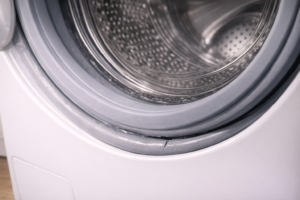
The rubber door seal on a front-loading washing machine is designed to create a watertight barrier during washing and spinning. Over time, this flexible gasket can wear, crack, or shift out of position. When that happens, leaks often begin gradually rather than all at once.
Recognising the early signs of seal damage can help you address the issue before it leads to larger water problems.
Visible Cracks or Splits in the Rubber
One of the clearest indicators of damage is visible cracking along the inner lip of the gasket. These cracks may start small and expand over time.
Look closely at:
-
The lower section of the seal
-
Areas that fold inward
-
Edges that press against the door glass
Even small splits can allow water to escape during high-pressure wash or spin cycles.
Tears or Holes in the Gasket
Sharp objects left in pockets, such as coins or keys, can damage the rubber during washing. Tears may appear as small punctures or longer rips along the fold.
If you notice:
-
A flap of rubber pulling away
-
A visible hole
-
A section that looks thin or stretched
The seal may no longer form a reliable barrier.
Persistent Leaking From the Front
If water consistently appears at the front of the machine — especially during washing or spinning — and cleaning does not resolve the issue, seal damage is likely.
Leaks caused by damage often:
-
Recur after cleaning
-
Appear in the same spot each cycle
-
Increase over time
If you’re unsure whether the leak is seal-related, see Why Is Water Leaking From the Washing Machine Door?
The Seal Feels Brittle or Warped
A healthy door seal should feel flexible and smooth. Over time, exposure to detergent, moisture, and temperature changes can cause the rubber to harden or warp.
If the gasket:
-
Feels stiff instead of flexible
-
Appears uneven around the rim
-
Does not sit flush against the door
Its sealing ability may be compromised.
Sections Pulling Away From the Frame
The gasket is secured by retaining bands that hold it in place. If part of the seal begins pulling away from the drum opening, water may escape even if the rubber itself is intact.
Check for:
-
Gaps between the rubber and the metal rim
-
Visible separation at the outer edge
A loose fit can prevent consistent sealing.
Ongoing Mould or Heavy Buildup
While mould alone does not always mean the seal is damaged, persistent buildup can degrade rubber over time. If deep cleaning does not restore the seal’s condition and the surface appears deteriorated, damage may be developing beneath the surface.
Proper inspection is important before deciding on replacement. For guidance, see How to Inspect a Washing Machine Door Seal for Damage.
When Damage Means Replacement
Minor debris or buildup can often be resolved with cleaning. However, visible cracks, tears, or separation usually indicate that the seal has reached the end of its functional life.
If you suspect significant wear, When a Washing Machine Door Seal Needs Replacement explains what to consider next.
For a complete overview of how door seal leaks develop and what to check first, see Washing Machine Door Seal Leaking: Causes and What to Check First.
A Practical Approach
Door seal damage often develops gradually. Small cracks or stiffness may not cause immediate leaking but can worsen with continued use.
Regular inspection and cleaning can extend seal life. When clear signs of structural damage appear, replacement is typically more effective than repeated cleaning attempts. Addressing the issue early can help prevent water damage and reduce long-term repair costs.