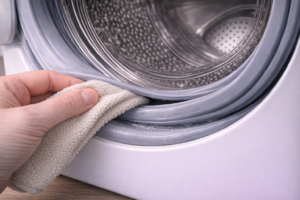
Preventing washing machine door seal leaks is largely a matter of regular maintenance and proper use. The rubber gasket around the door is designed to withstand constant movement and moisture, but small habits can significantly extend its life.
Taking a few preventative steps can reduce buildup, preserve flexibility, and help avoid unexpected leaks.
Wipe the Seal After Each Use
Moisture left inside the folds of the gasket can encourage mould growth and residue buildup. After finishing a wash cycle:
-
Use a dry cloth to wipe the inner lip
-
Dry the lower folds where water collects
-
Remove visible lint or debris
This simple habit helps reduce long-term deterioration.
Leave the Door Slightly Open
Allowing airflow inside the drum and around the gasket helps moisture evaporate. Leaving the door slightly ajar between washes can reduce mould growth and prevent persistent dampness inside the seal.
Good ventilation supports rubber flexibility over time.
Clean the Seal Regularly
Even with daily drying, detergent residue and fabric softener can accumulate. A periodic cleaning routine helps maintain the sealing surface.
Clean the gasket:
-
Monthly for light use
-
Every few weeks for frequent use
How to Clean a Washing Machine Door Seal Properly explains the process in detail.
Avoid Overloading the Machine
Overloading places extra pressure on the door during spin cycles. Heavy loads can push clothing against the glass, distorting the gasket temporarily and stressing the rubber.
Following the manufacturer’s recommended load limits helps reduce strain on the seal.
Check Pockets Before Washing
Small objects such as coins, keys, or hair clips can damage the rubber during washing. These items may cause punctures or tears if trapped between the drum and gasket.
Checking pockets before each wash reduces the risk of physical damage.
Inspect the Seal Periodically
Regular inspection helps detect minor wear before it becomes a leak.
Look for:
-
Small cracks along the inner lip
-
Areas that feel stiff or brittle
-
Sections beginning to pull away
Common Signs Your Washer Door Seal Is Damaged outlines what to watch for.
Address Minor Issues Early
If you notice small leaks or visible buildup, addressing them promptly can prevent further deterioration. Ignoring minor issues may allow damage to worsen over time.
For a broader understanding of door seal leaks and what to check first, see Washing Machine Door Seal Leaking: Causes and What to Check First.
A Practical Approach
Most washing machine door seal leaks develop gradually due to buildup, wear, or strain. Consistent maintenance and proper usage habits can extend gasket life and reduce the likelihood of unexpected water leaks.
Small preventative steps often make the difference between a long-lasting seal and early replacement.