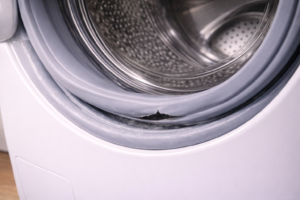
A washing machine door seal is designed to last for years, but it is still a wear component. Constant exposure to water, detergent, pressure, and movement eventually affects the rubber. While minor leaks can sometimes be resolved with cleaning, visible structural damage usually signals that replacement is the more reliable solution.
Understanding when cleaning is no longer enough helps avoid repeated leaks and ongoing frustration.
Visible Cracks or Splits in the Rubber
Small surface marks do not always require replacement. However, deeper cracks or splits that extend through the rubber often do.
Replacement is typically necessary if you notice:
-
Cracks that widen when the seal is flexed
-
Tears along the inner lip
-
Holes or punctures in the folds
-
Rubber separating along the edge
Even minor tears can allow water to escape during high-pressure spin cycles.
Sections Pulling Away From the Frame
The gasket is secured by retaining bands around the drum opening. If the seal begins pulling away or no longer sits evenly against the metal rim, it may not maintain proper contact with the door.
Signs of concern include:
-
Visible gaps between the rubber and frame
-
Uneven alignment around the door opening
-
A seal that shifts position easily
If the gasket cannot sit firmly in place, cleaning will not restore its function.
Persistent Leaking After Cleaning
If you have thoroughly cleaned the seal and removed all visible debris, but water continues leaking from the same area, structural wear may be present.
Leaks that persist after cleaning often indicate:
-
A hidden tear
-
Internal weakening of the rubber
-
Loss of flexibility
In these cases, repeated cleaning attempts are unlikely to resolve the issue.
The Seal Feels Brittle or Warped
A healthy gasket should feel smooth and flexible. Over time, rubber can become stiff, warped, or distorted due to detergent exposure and temperature changes.
If the seal:
-
Feels hard rather than flexible
-
Appears uneven
-
Does not sit flush against the door glass
Its sealing ability may be compromised.
The Machine Is Otherwise in Good Condition
Replacing a door seal is usually considered when:
-
The washing machine is functioning properly
-
There are no other major mechanical issues
-
The cost of replacement is reasonable relative to the appliance’s age
If the washer is already experiencing multiple issues, you may need to evaluate whether repair is practical.
How Much Does It Cost to Replace a Washer Door Seal? outlines the financial considerations.
When Replacement May Not Be Worth It
If the washing machine is older and experiencing additional faults, a door seal leak may be part of a larger pattern of wear.
In those cases, you may want to review When a Door Leak Means It May Be Time to Replace the Washer.
For a complete overview of door seal leaks and what to check first, see Washing Machine Door Seal Leaking: Causes and What to Check First.
A Practical Approach
A washing machine door seal usually needs replacement when visible structural damage is present or when leaks persist despite proper cleaning and inspection.
Addressing seal wear promptly can prevent water damage to flooring and surrounding areas. Evaluating the condition of the machine as a whole helps determine whether seal replacement is the most practical next step.