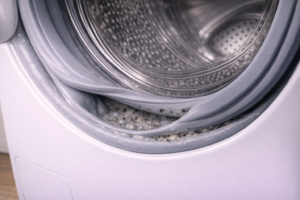
Mould and detergent buildup inside a washing machine door seal can gradually interfere with how well the gasket performs. While the rubber seal is designed to be flexible and watertight, residue accumulation can affect its shape, flexibility, and ability to sit evenly against the door glass.
In many cases, minor leaks begin with buildup rather than structural damage.
How Buildup Forms Inside the Seal
Front-loading washing machines are designed with deep rubber folds that help contain water. These folds can trap:
-
Detergent residue
-
Fabric softener
-
Lint and fibres
-
Hair and small debris
-
Moisture after cycles
When moisture remains inside the folds, it creates an environment where mould can develop. Over time, residue and mould may harden or thicken, altering the surface of the gasket.
How Mould Affects the Seal
Mould growth does not always cause immediate leaks. However, heavy or persistent mould can:
-
Reduce rubber flexibility
-
Create uneven sealing surfaces
-
Prevent full contact with the door glass
If the seal cannot compress evenly, water may escape during washing or spinning.
In some cases, mould can also weaken the rubber over time, contributing to premature wear.
How Residue Interferes With Contact
The inner lip of the door seal presses directly against the door glass during operation. This contact must remain smooth and consistent.
If detergent buildup accumulates along the sealing edge, it may:
-
Create small gaps
-
Prevent full compression
-
Cause minor water seepage under pressure
Even a thin layer of hardened residue can interfere with the seal’s ability to function properly.
Signs That Buildup May Be Causing the Leak
Leaks caused by mould or residue are more likely if:
-
The leak developed gradually
-
There are no visible cracks or tears
-
Cleaning improves the issue
-
The rubber still feels flexible
If visible structural damage is present, the problem may go beyond buildup. Common Signs Your Washer Door Seal Is Damaged explains what to look for.
What You Can Do First
Before assuming the seal is worn out, perform a thorough cleaning.
Pull back the folds of the gasket and remove visible debris. Clean the entire seal carefully, paying particular attention to the lower section and inner lip.
A step-by-step guide is available in How to Clean a Washing Machine Door Seal Properly.
After cleaning, run a short test cycle to see whether the leak persists.
When Buildup Has Caused Lasting Damage
In some cases, long-term mould exposure can degrade rubber. If the gasket feels brittle, warped, or visibly cracked even after cleaning, the seal may have been weakened.
At that stage, replacement may be necessary. When a Washing Machine Door Seal Needs Replacement outlines when cleaning is no longer enough.
For a broader overview of door seal leaks and what to check first, see Washing Machine Door Seal Leaking: Causes and What to Check First.
A Practical Approach
Mould and buildup are common in front-loading machines and often contribute to minor front-door leaks. Regular cleaning and drying can prevent residue from interfering with the seal’s ability to compress properly.
Addressing buildup early may help avoid more extensive seal deterioration and reduce the need for replacement.